> For the complete documentation index, see [llms.txt](https://docs.powerviz.ai/powerviz/llms.txt). Markdown versions of documentation pages are available by appending `.md` to page URLs; this page is available as [Markdown](https://docs.powerviz.ai/powerviz/kpi/edit-mode-introduction/kpi-charts/linear-gauge.md).
# Linear Gauge
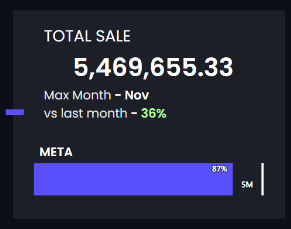
The Linear Gauge in the KPI tool provides a clear and effective way to measure progress, performance, or comparisons against a target. With its sleek bar-like design, this highly customizable chart helps users visualize key metrics in a simple yet impactful manner. Below is a detailed guide to its features and settings.
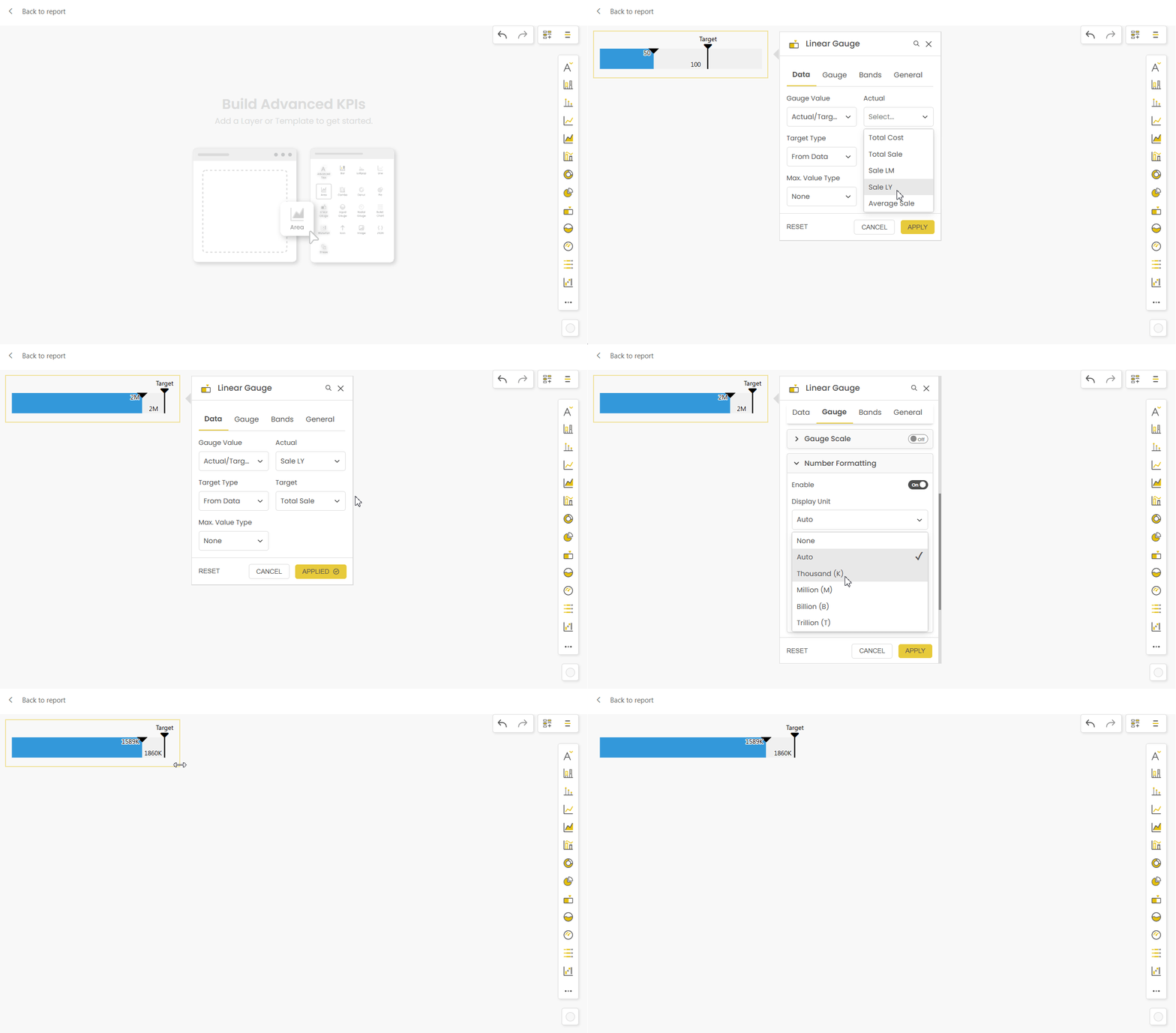
Here's a quick guide to create Linear Gauge in KPI:
Adding Linear gauge to KPI by Powerviz
## **Data Tab**
**Gauge Value**
* **Gauge Value Mode**: Use this mode to display the gauge value as a percentage (requires a gauge value field in percentage).
* **Actual-Target Mode**: Displays actual and target values (requires both actual and target fields).
**Actual Value Field (Only available in *****Actual-Target Mode*****)**
* Specify the field to represent the actual value.
**Target Type (Only available in *****Actual-Target Mode*****)**
* **From Data**: Target values are derived from a field.
* **Fixed**: A constant target value is used.
**Target Field (Only available in *****Actual-Target Mode*****)**
* Choose the field representing the target value.
**Max Value Type**
* **None**: No maximum is applied.
* **From Data**: Maximum value is derived from a data field.
* **Fixed**: Use a constant maximum value.
***
## **Gauge Tab**
**Gauge Color with** [**Conditional Formatting**](/powerviz/kpi/edit-mode-introduction/kpi-charts/conditional-formatting.md)
* Set a default color for the gauge and apply rules for dynamic color changes based on conditions.
**Remaining Color with** [**Conditional Formatting**](/powerviz/kpi/edit-mode-introduction/kpi-charts/conditional-formatting.md)
* Define the color for the remaining portion of the gauge using conditional formatting.
**Gauge Radius**
* Customize the edge style of the gauge:
* **Sharp**: Straight edges.
* **Rounded**: Smooth, rounded edges.
* **Custom**: Define a custom edge radius.
**Actual Marker**
* **Toggle On/Off**: Enable or disable the actual value marker.
* **Size**: Adjust the size of the marker.
* **Color**: Set the marker color.
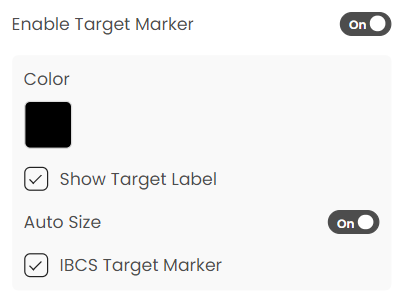
**Target Marker**
* **Toggle On/Off**: Enable or disable the target marker.
* **Color**: Set the marker color.
* **Target Label Checkbox**: Show or hide the target label.
* **Auto Size Toggle (On/Off)**: Automatically adjust the marker size.
* **IBCS Target Marker Checkbox**: Enable or disable the International Business Communication Standards (IBCS) target marker.
**Data Labels**
* **Type**: Choose to display labels as *Actual* or *Percent* values.
* **Text Size**: Adjust the label font size.
* **Color**: Set the label color.
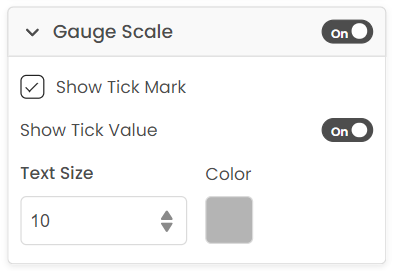
**Gauge Scale**
* **Tick Mark Checkbox**: Enable or disable tick marks on the scale.
* **Tick Value Toggle**: Show or hide tick values.
* **Text Size**: Set the font size for tick values.
* **Color**: Choose the color for the scale text.
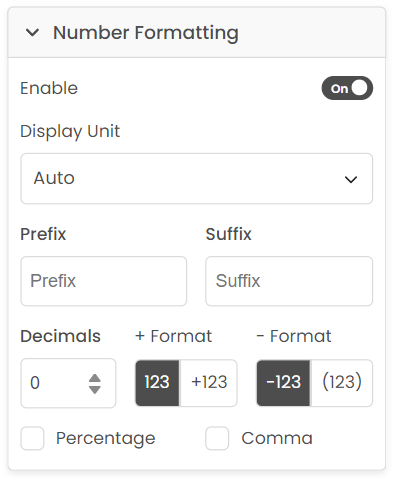
**Number Formatting**
* **Display Unit**: Select the unit for the gauge values:
* None, Auto, Thousand (*K*), Million (*M*), Billion (*B*), Trillion (*T*).
* **Prefix**: Add a prefix to the values.
* **Suffix**: Add a suffix to the values.
* **Decimals**: Define the number of decimal places.
* **+Format**: Choose between `123` or `+123` for positive values.
* **-Format**: Choose between `-123` or `(123)` for negative values.
* **Percentage Checkbox**: Display values as percentages.
* **Comma Checkbox**: Enable or disable comma separators for numbers.
**Global Options**
* **Font Family**: Select a font family for all text elements.
* **Styling**: Apply styling options such as Bold (*B*), Italic (*I*), or Underline (*U*).
* **Show Tooltip**: Enable or disable tooltips on hover.
***
## **Bands Tab**
**Display Type**
* Choose how bands are displayed:
* **By Percentage**: Define bands based on percentage ranges.
* **By Value**: Define bands based on specific values.
**Show Band Names in Chart Checkbox**
* Enable or disable band names within the chart.
**Band Name Color**
* Set the color for band names.
**Band Details**
* **Band Name**: Specify the name of the band.
* **Value**: Define the range or value for the band.
* **Color**: Assign a color to the band.
***
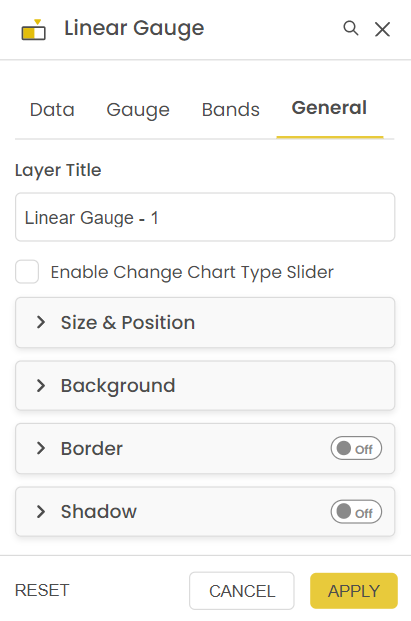
## General tab
This is common tab for all visuals click [here ](/powerviz/kpi/edit-mode-introduction/kpi-charts/general-tab.md)to explore settings. You can adjust visual properties, manage formatting options, and fine-tune various features to align with your requirements. Make sure to explore each section for a complete configuration.