> For the complete documentation index, see [llms.txt](https://docs.powerviz.ai/powerviz/llms.txt). Markdown versions of documentation pages are available by appending `.md` to page URLs; this page is available as [Markdown](https://docs.powerviz.ai/powerviz/word-cloud/introduction.md).
# Introduction
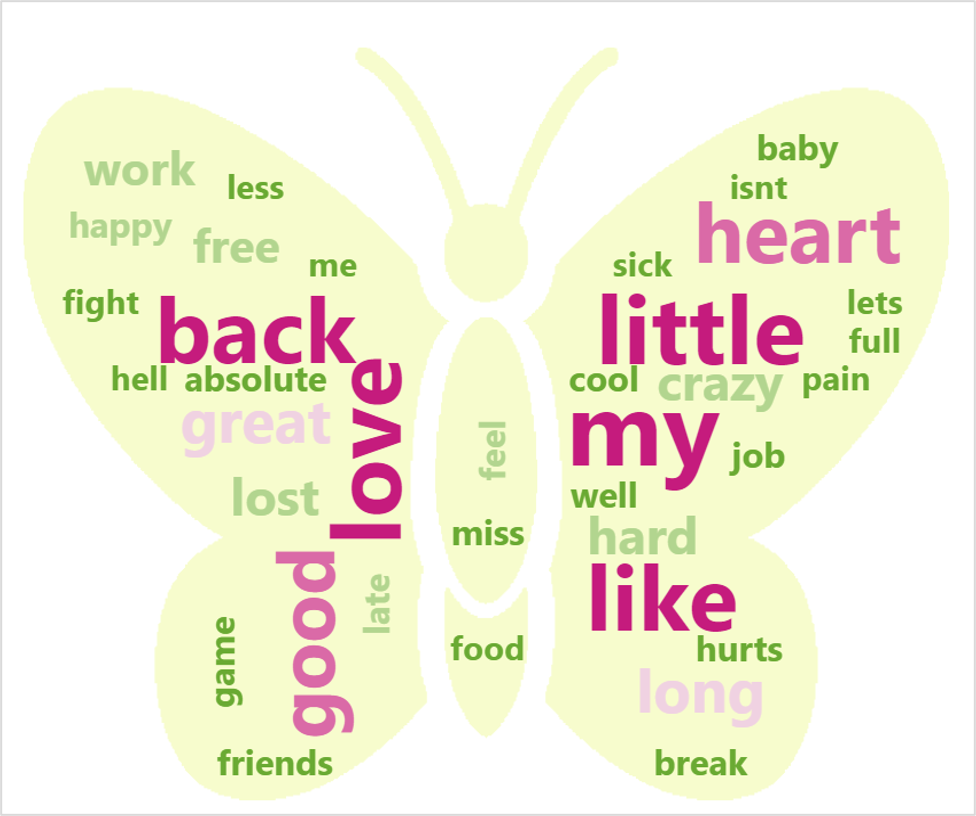
Powerviz [Word Cloud](https://powerviz.ai/word-cloud) is a visual type used to represent text-based data. The term word cloud is also known as **text cloud** and **tag cloud**. This is commonly used to highlight the frequency of words within a given category. This provides a quick and comprehensive glimpse into a big volume of text.
Powerviz Word Cloud is a **Power BI custom visual** available at [AppSource.](https://appsource.microsoft.com/en-us/product/power-bi-visuals/truvizinc1674781244292.word-cloud-by-powerviz?exp=ubp8\&tab=Overview)
Powerviz Word Cloud is beneficial in a variety of situations, including text-rich data, content analysis, open-ended surveys, research, and interviews.
This documentation will help you get started with Word Cloud visual by explaining everything you need to know about it. If you're new to our site, check out the [visual library](https://powerviz.ai/visuals) for other visuals that met your requirements.
**Table of Content**
1. Introduction
2. Guides
3. Examples
**Key features of the Powerviz Word Cloud Visual:**
* Customize `font style`, `size`, and `color`.
* Choose from over `2000 icons`, `images`, or `uploads` from a local computer/URL.
* Select colors from `6 schemes` and `30+ palettes`.
* Use the `ranking` feature to prioritize significant words in the dataset.
* Manage phrases by `splitting` into meaningful words.
* Filter and modify text by `excluding` unwanted characters, numbers, punctuations, emojis, and conjunctions.
* Choose the text `orientation` from 8 different options.
* Add multiple `conditional formatting` rules to color words based on predefined logic.
* Additional features include grid view, `lasso`, and `reverse lasso`.
Follow this **guide** to have an in-depth view of our Word Cloud visual. To know more about other Powerviz visuals and slicers, visit our [`library`](https://powerviz.ai/visuals) or [`contact us`](https://powerviz.ai/contactus) directly for a demo.
### Examples[](https://docs.powerviz.ai/word-cloud/introduction#examples)